Crawl space encapsulation in Omaha
A drier crawl space starts with the source.
Encapsulation can help manage moisture beneath your home. Here’s what the process can involve, when a liner may be enough, and what to consider before sealing the space.
Call (402) 623-6899Questions about moisture, water or the floor above? Start with a conversation.
Tell us about your crawl space
Share a few details about what you’ve noticed.
What is crawl space encapsulation?
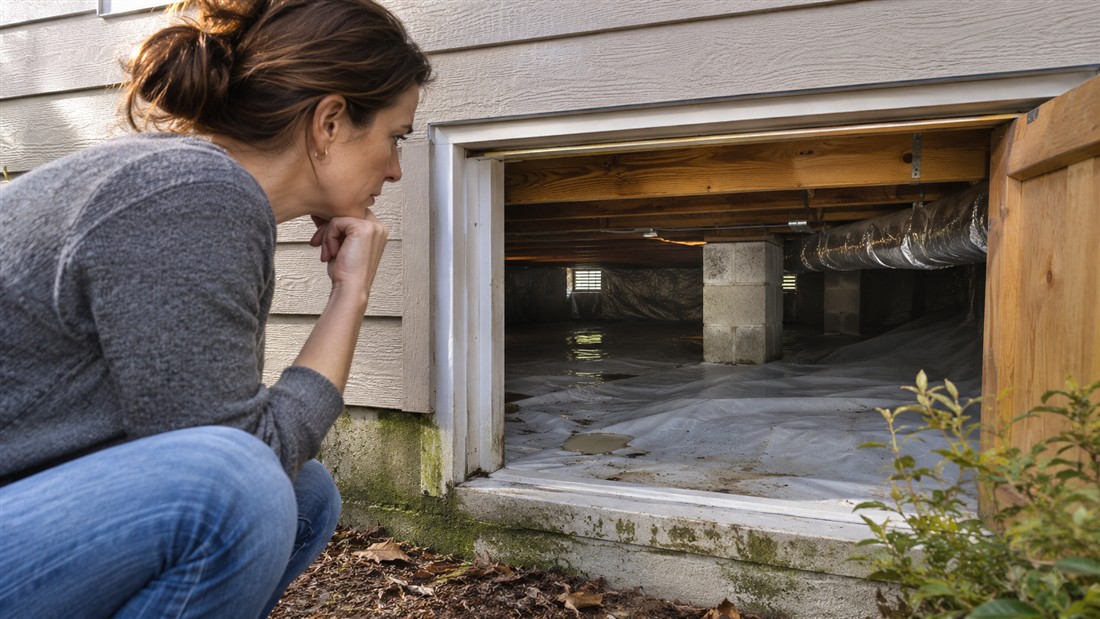
Encapsulation is an approach to separating a crawl space from moisture in the ground and, depending on the design, outside air. It commonly includes a durable plastic liner over the soil, with seams and edges sealed. A plan may also address walls, vents, insulation and humidity control.
The goal is a moisture-control system suited to the house—not simply covering everything in plastic. The U.S. Department of Energy explains how a sealed ground barrier can limit moisture moving up from the soil.
Is a vapor barrier the same thing?
A ground vapor barrier is one part of many encapsulation plans. A basic liner may cover exposed soil; a more complete system may seal overlaps and edges and include additional moisture controls. The condition of the existing liner, where moisture is entering and the desired result all matter.
If water is actively collecting, first investigate the source. A liner alone will not repair a plumbing leak or carry pooled water away. See crawl space waterproofing and drainage.
What should happen before the space is sealed?
- Identify plumbing leaks, standing water and outside drainage problems.
- Check wood framing and supports for damage that needs repair before it is covered.
- Consider how the space will dry and whether a dehumidifier or other humidity control is appropriate.
- Review any fuel-burning appliances and their combustion-air needs before changing vents.
Sealing vents is not a one-size-fits-all DIY step. Appliance safety and applicable building requirements matter; the Department of Energy’s guide discusses these considerations.
Questions to ask about a proposal
Ask which surfaces will be covered, how seams will be sealed, how standing water will be handled and whether equipment will need ongoing maintenance. Also ask what happens if damaged wood or another hidden issue is found.
Compare the likely cost drivers in our repair cost guide.